For thousands of years the summit was left alone. Then, in the space of a few decades in the mid-1800s, it gained hotels, a carriage road, a railway, a weather station, and a daily newspaper.
The sacred mountain
To the Abenaki, the mountain was Agiocochook, often translated as "the place of the Great Spirit" or "home of the Concealed One."
The first recorded ascent came in 1642, when the colonist Darby Field reached the top in June. He climbed it again that October. In 1784, a scientific expedition led by the Reverend Manasseh Cutler gave the mountain the name of George Washington.
The Crawfords and the naming of the peaks
In 1819, Abel Crawford and his son Ethan Allen Crawford cut a trail from their home in what is now Crawford Notch to the summit of Mount Washington. The Crawford Path is now considered the oldest continuously maintained hiking trail in the United States.
The next summer, in 1820, Ethan Allen Crawford guided a party of prominent citizens from nearby Lancaster, New Hampshire, up the new path. Among them was John Wingate Weeks. On that trip, the group named many of the surrounding peaks for American presidents. Mount Adams was named on July 31, 1820.
In 1821, Ethan Allen Crawford built a small house on the summit. It lasted until a storm destroyed it in 1826.
Hotels in the clouds
By the mid-1800s, the summit had become one of the first tourist destinations in the country. Visitors rode up on horseback along bridle paths, and two hotels competed for their business.
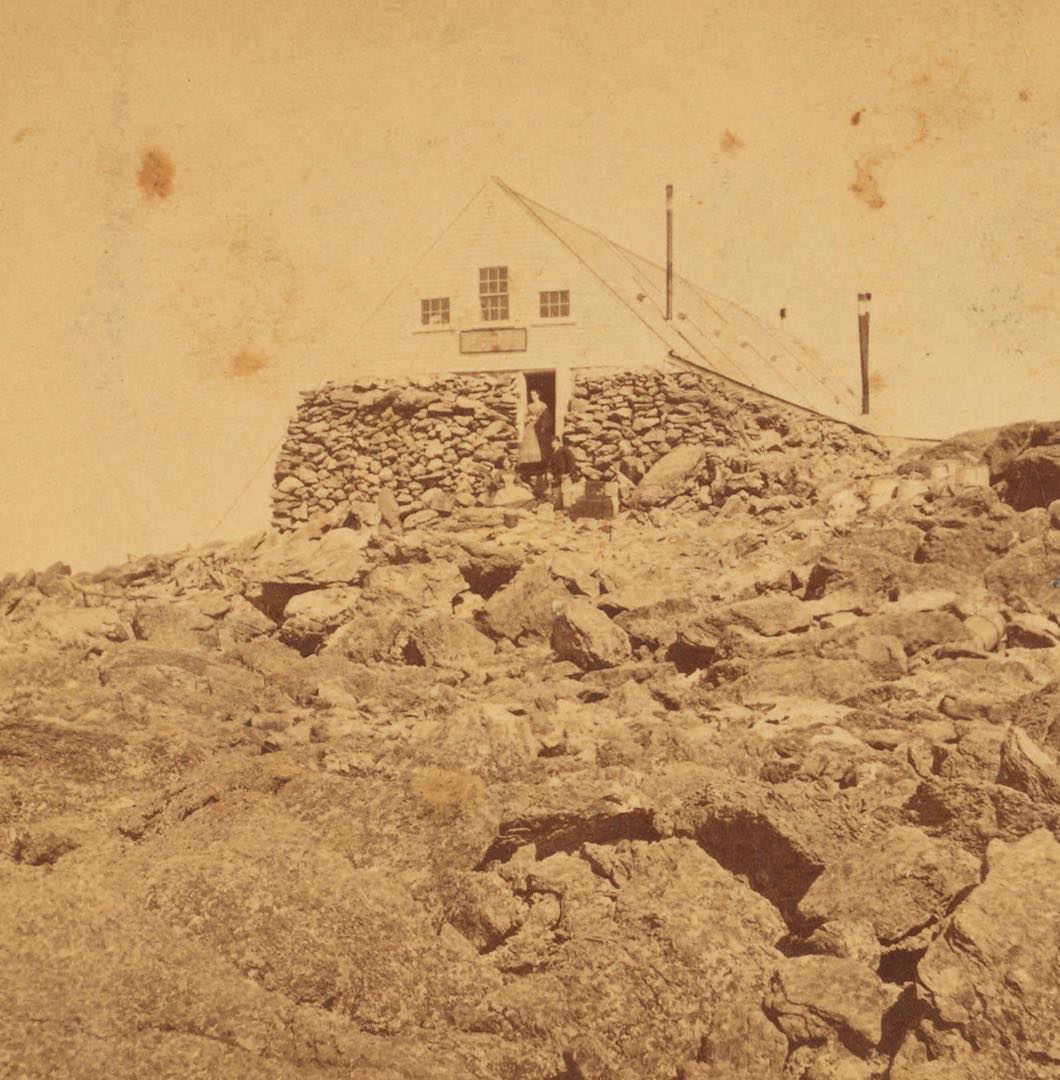
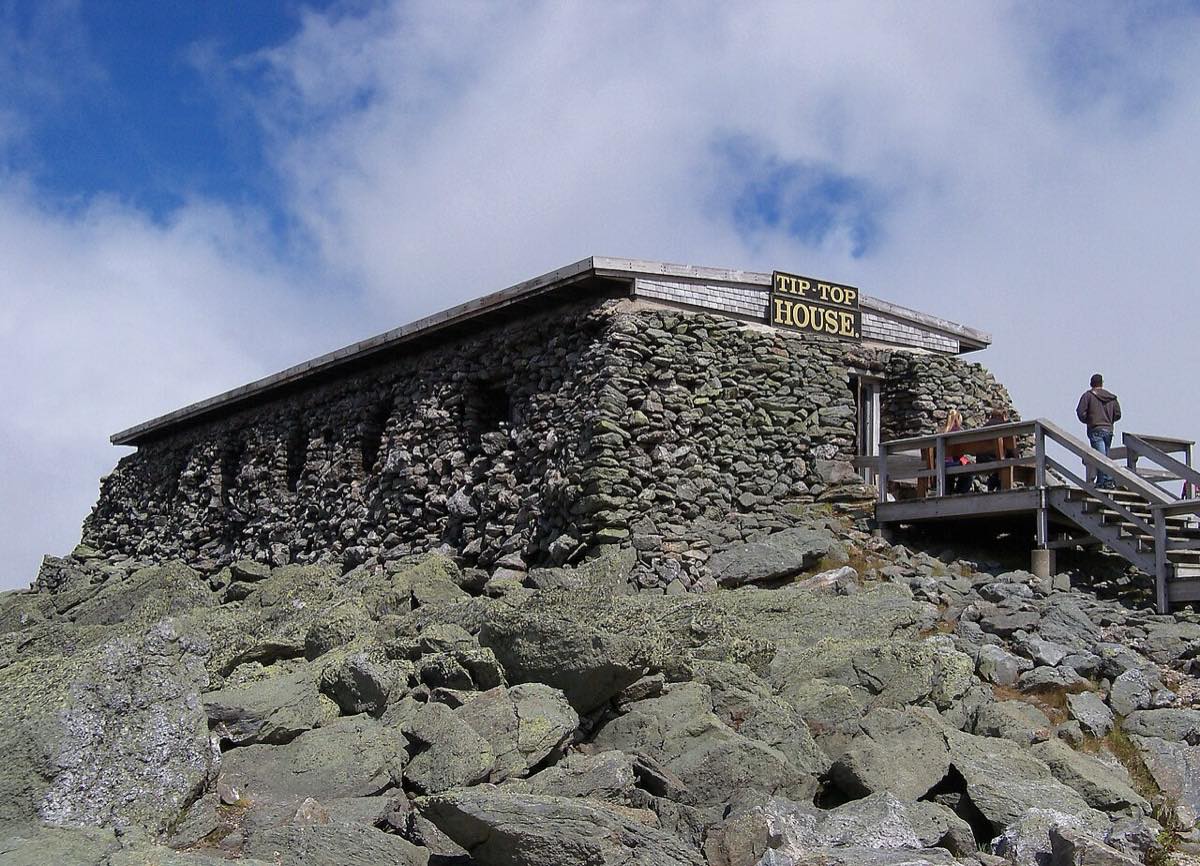
The Summit House opened in 1852. It was a 64-foot stone building, anchored to the mountain by four heavy chains thrown over its roof. A year later, the rival Tip-Top House was built of stone just a few steps away. The Summit House was later rebuilt in wood with 91 rooms in 1872–73.
Then and now: the Tip-Top House


The road and the railway
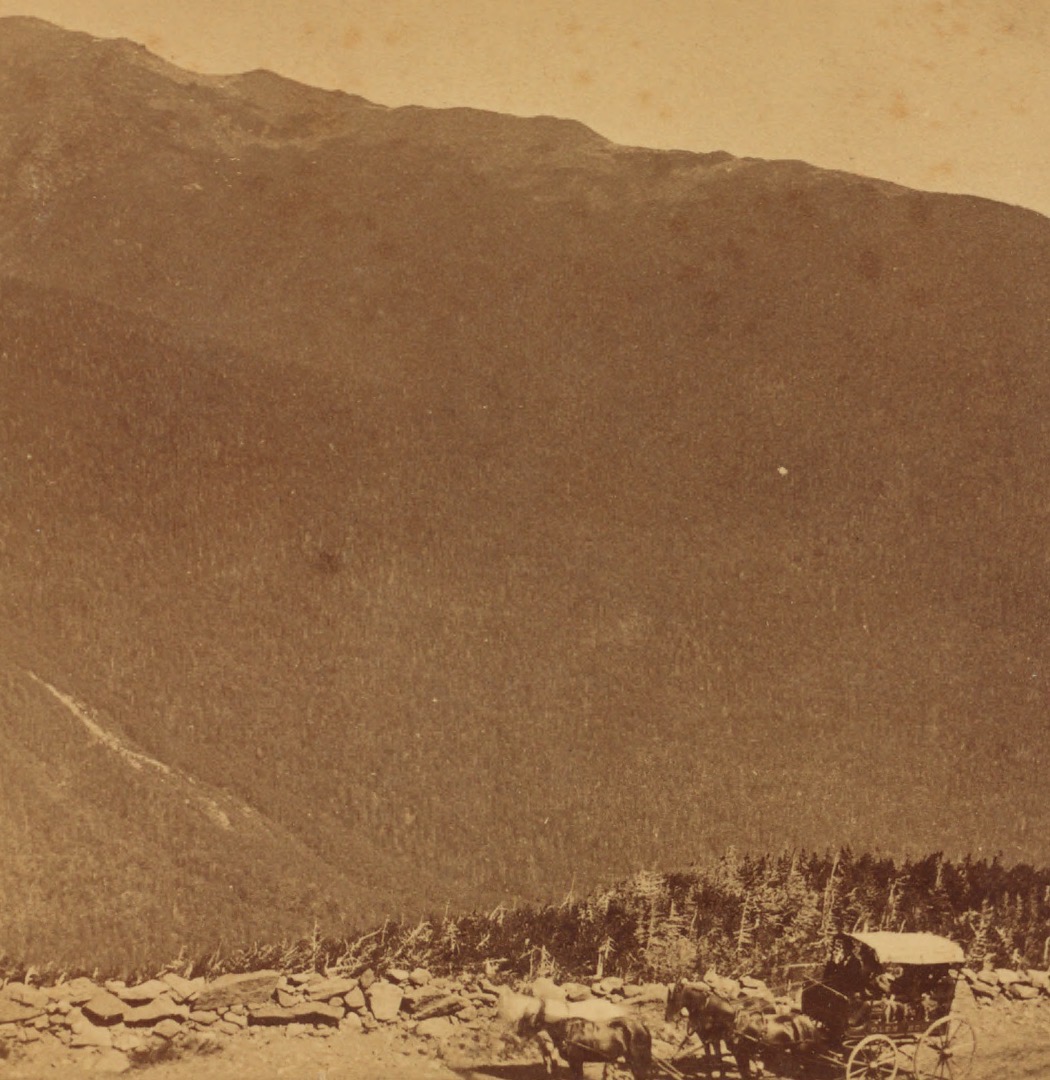
In 1861, the Mount Washington Carriage Road opened, climbing 7.6 miles from the Glen House hotel on the east side. Horse-drawn stages carried passengers to the summit. Today it is the Mount Washington Auto Road, and its guided van tours are still called "stages."
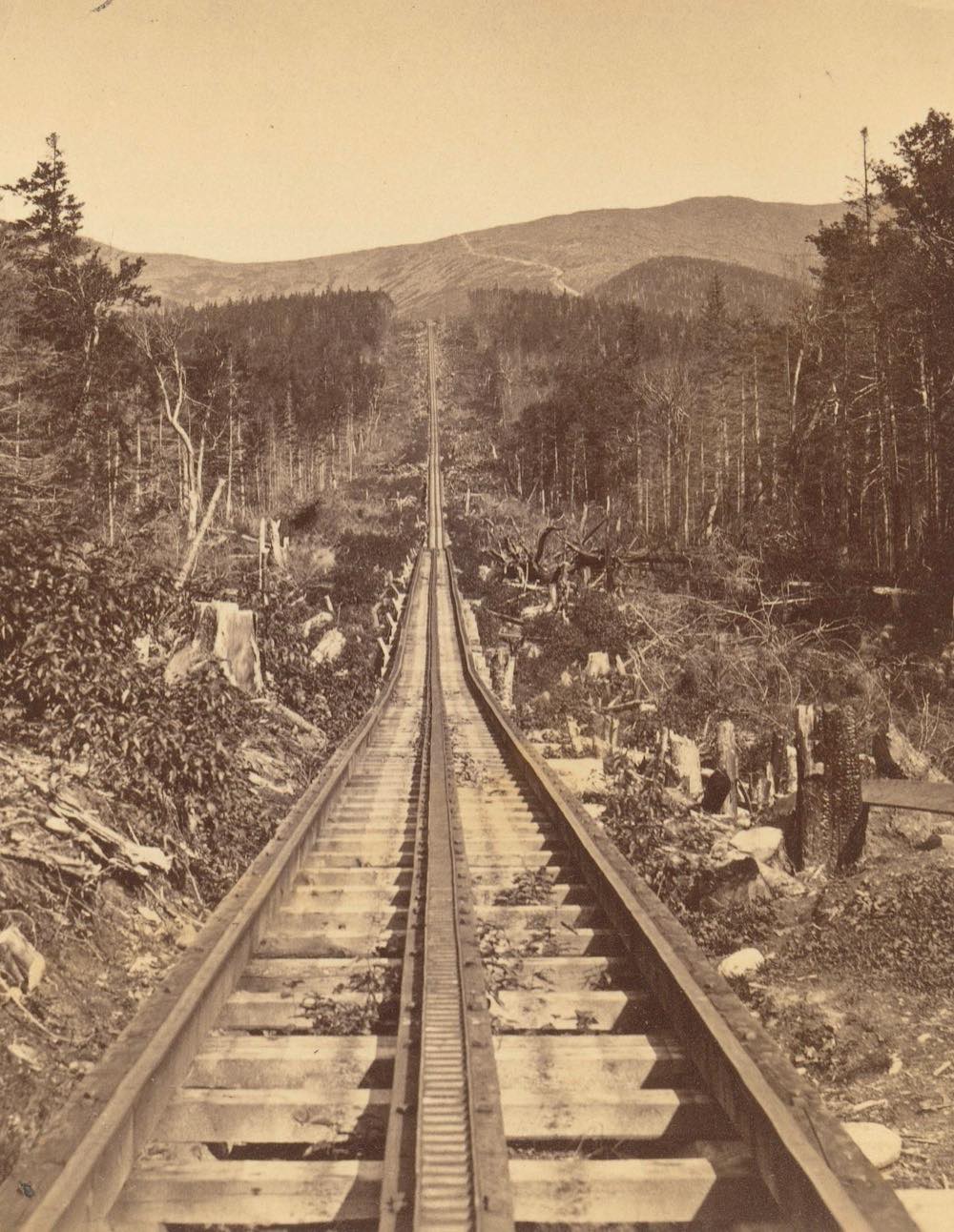
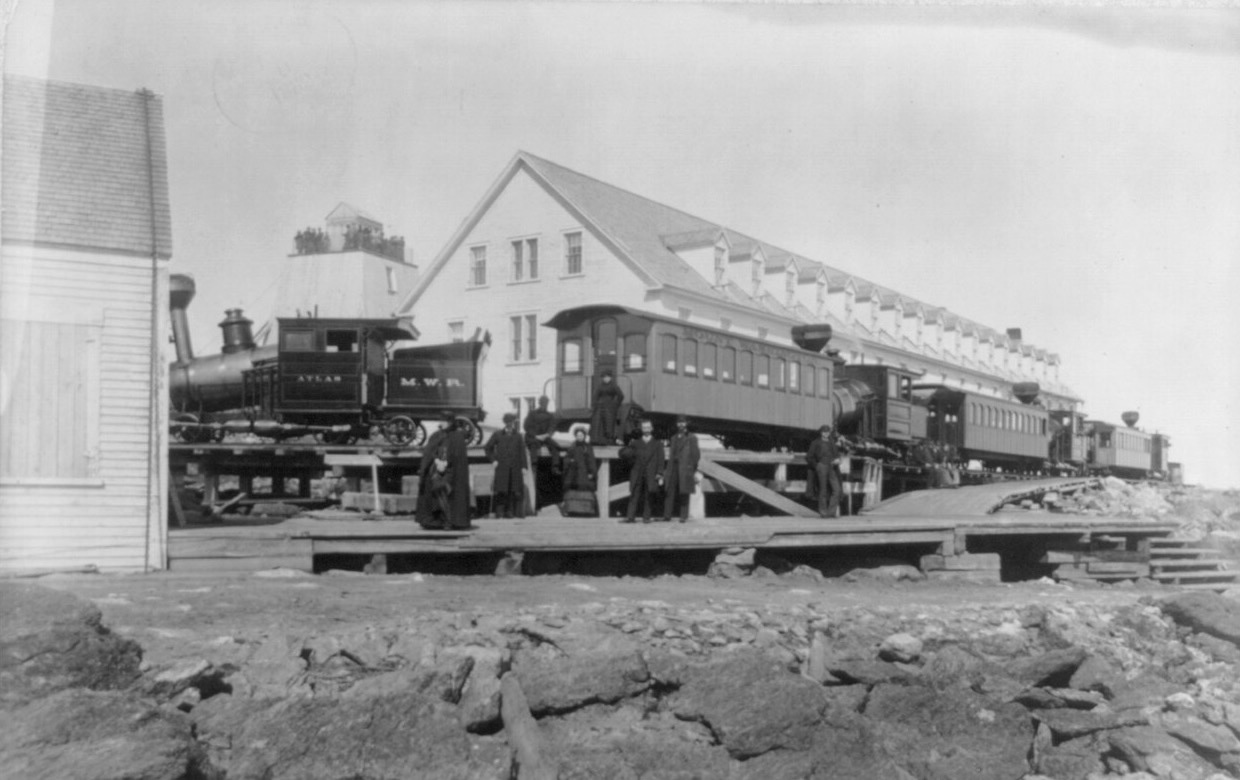
On the west side, Sylvester Marsh's Cog Railway reached the summit in 1869. Its tracks were laid on a timber trestle that climbed straight up the mountainside, as in the photograph here from around the time it opened.
The Glen House and the railway brought a wave of visitors, including painters and photographers. Albert Bierstadt and his photographer brothers stayed at the Glen House.


Weather watchers and a newspaper above the clouds
From 1870 to 1892, the U.S. Army Signal Service, a forerunner of the National Weather Service, kept a weather station on the summit. Observers endured winters at the top decades before the Mount Washington Observatory was founded in 1932.
Beginning in 1877, the summit had its own newspaper. Among the Clouds, founded by Henry M. Burt, was printed on the mountain during the summer tourist season, and its first office was in the Tip-Top House. It continued for forty years, until 1917.
Tragedy and fire
On June 30, 1900, William Buckingham Curtis, a founder of American amateur athletics, died of exhaustion during a summer snowstorm near the Lakes of the Clouds. His death led to the building of a stone emergency shelter there in 1901, which grew into today's Lakes of the Clouds Hut.
In 1908, a great fire swept the summit and destroyed nearly every building, including the Summit House. Only the Tip-Top House survived. A new Summit House, built of granite, opened in 1915.
The modern summit
The Mount Washington Observatory was founded in 1932, and two years later its observers recorded the 231 mph Big Wind. In 1937, an early radio station moved to the summit to relay weather reports, and commercial broadcasting from the mountain began in 1941. For decades, a TV station on the summit reached viewers across northern New England and into Quebec.
Today the summit is protected as Mount Washington State Park. The Sherman Adams summit building houses the visitor facilities and the Observatory, and the Tip-Top House is preserved as a museum of the mountain's hotel era. Read more about the summit on the Mount Washington page.